Can Exercise Improve Fertility? What Research Says About Movement and Conception
Can Exercise Affect Fertility?
Fertility is influenced by many factors, including age, ovulation, hormonal balance, metabolic health, body composition, and overall wellbeing.
Physical activity can affect several of these factors.
Research suggests exercise may influence reproductive health through mechanisms such as:
improved insulin sensitivity
better metabolic health
improved cardiovascular fitness
reduced systemic inflammation
improved stress regulation
These factors may be especially relevant in conditions such as polycystic ovary syndrome (PCOS), where metabolic dysfunction can interfere with ovulation.
This does not mean exercise alone resolves fertility challenges, but it may positively influence important contributing factors.
What Type of Exercise Helps Most?
This is where intensity appears to matter.
Research suggests mild-to-moderate exercise is generally compatible with — and often supportive of — reproductive health.
Very high training volumes or chronically intense exercise, especially when combined with insufficient energy intake, may negatively affect menstrual function and ovulation in some women.
In other words, more is not always better.
But is one type of exercise clearly superior?
At present, no single exercise modality has been proven to be optimal for fertility.
Walking, yoga, Pilates, swimming, resistance training, and moderate aerobic exercise are commonly recommended in practice, largely because of their safety profile, sustainability, and general health benefits.
This means recommendations are often based not only on published research, but also on physiological rationale and practical experience.
What Research Says About Fertility and IVF
Exercise has been studied both in women trying to conceive naturally and in women undergoing fertility treatment such as IVF.
Large observational studies suggest regular physical activity is associated with improved fertility outcomes in some populations, particularly among women with metabolic dysfunction or obesity.
Research in IVF is also encouraging.
A systematic review and meta-analysis found that women who engaged in regular physical activity before IVF or ICSI treatment had higher clinical pregnancy and live birth rates compared with inactive women. ²
However, studies vary considerably in exercise type, intensity, duration, and participant characteristics.
This means research supports the potential value of physical activity, but does not define one ideal exercise prescription.
What Does Fertility Research Suggest About the Aviva Method?
The Aviva Method is a structured sequence of 18 exercises practised at mild-to-moderate intensity, involving rhythmic pelvic and lower-body movement.
Unlike general exercise modalities, it was specifically designed with reproductive and pelvic health in mind.
This distinction matters.
At present - unlike period pain and PMS -no peer-reviewed published clinical studies have specifically examined the Aviva Method for fertility outcomes such as conception rates, ovulation, or IVF success.
However, absence of direct fertility trials does not automatically imply lack of value.
Moderate exercise is generally considered compatible with — and often supportive of — reproductive health, and the Aviva Method falls within this category.
In addition, decades of instructor and participant experience, along with unpublished observational findings reported by official Aviva organizations, have described positive fertility-related outcomes.⁵ ⁶
These observations are encouraging, even if they do not constitute scientific proof.
Science cannot currently promise fertility outcomes from the Aviva Method — but then again, neither can most fertility interventions.
Not even IVF guarantees pregnancy.
Viewed in that context, the Aviva Method may be considered a reasonable option worth considering for women seeking structured movement support during their fertility journey.
Who May Benefit Most?
The Aviva Method may be worth exploring for women who:
prefer structured home-based movement
want moderate rather than high-intensity exercise
are interested in pelvic-focused movement
seek a complementary practice alongside medical care
Women undergoing fertility treatment should always discuss exercise-related questions with their treating clinician.
The Aviva Method is a complementary movement practice and not a substitute for fertility evaluation or medical treatment.
Curious to Learn More?
If you are wondering whether the Aviva Method could be relevant in your own fertility journey, you are welcome to get in touch.
Every woman’s story, health background, and fertility journey are different, and sometimes a short conversation is the best place to start.
→ Upcoming workshops in Ireland
→ Contact me
References & Further Reading
¹ Mussawar et al., 2023 — Physical Activity and Fertility Review
Review of mechanisms linking exercise, reproductive health, and fertility.
Read review
² Rao et al., 2018 — Exercise Before IVF / ICSI Meta-analysis
Systematic review suggesting physical activity before IVF may improve pregnancy and live birth outcomes.
Read study
³ Teede et al., International Evidence-Based Guideline for PCOS
Exercise and lifestyle interventions are recommended as first-line management in PCOS.
Read guideline
⁴ American College of Obstetricians and Gynecologists (ACOG) — Exercise During Fertility Treatment / Preconception Health
General guidance on physical activity and reproductive health.
Read guidance
⁵ Official Aviva Method Research Page (Israel / International)
Research summaries, theoretical background, and unpublished observational fertility-related findings from Aviva organizations.
Read resource
⁶ Official Aviva Method Hungary — Historical Background & Practice Experience
Background on the development of the method and long-standing instructor-reported experiences related to fertility and women’s health.
Read resource
About the author: Agnes Berta is a certified Aviva Method instructor based in Ireland, offering online and in-person workshops. About the instructor →
The Aviva Method is a structured sequence of 18 full-body exercises practised at mild-to-moderate intensity, using rhythmic movement patterns designed to support reproductive and pelvic health.
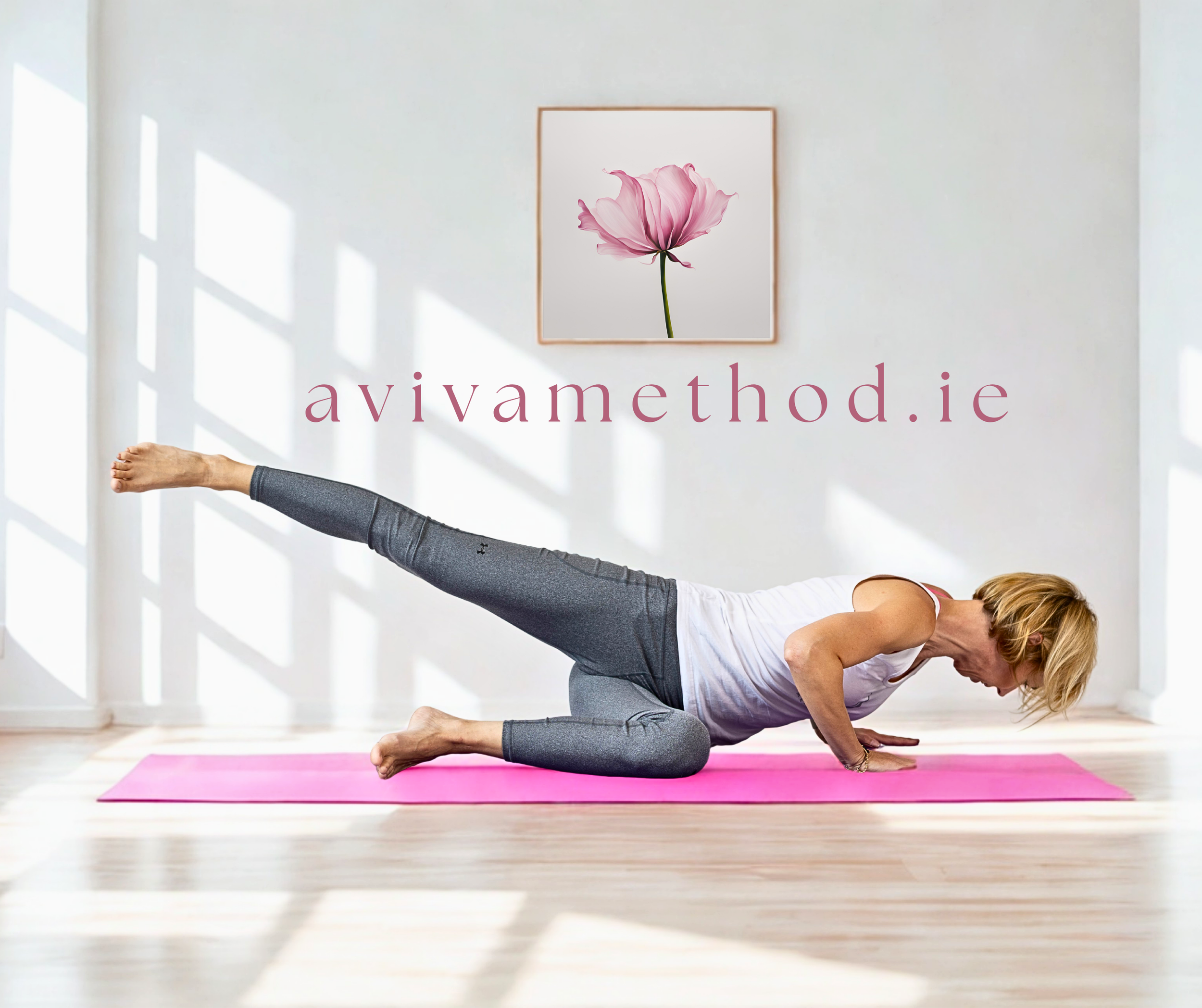
Aviva Exercises
Ready to try the Aviva Method?
You can learn with me online from wherever you are. If you don’t have an Aviva instructor available where you live, you are very welcome to join.
Not sure which option is right for you? Write to me.
Not ready yet? Watch the videos or follow @aviva_fertility to see more of the method first.