
How Planning Helped Me Cope During Fertility Treatment
4-minute read
Quick Read
When I started fertility treatment, I thought the clinic would tell me everything I needed to do. Instead, I realised that while the clinic was there to guide my treatment, I also needed to take ownership of the many lifestyle choices surrounding it.
As I began planning my nutrition, sleep, exercise, appointments and daily routines, something unexpected happened. I didn't become more anxious trying to "do everything"—I became calmer because I finally felt I was doing everything that was reasonably within my power.
Years later, I discovered that psychologists have long recognised something similar. When we focus on meaningful actions we can control during uncertain situations, we may cope better emotionally.
This article is the story behind What I Can Control—the planner I created from my own fertility journey, in the hope that it might help someone else too.
Key Takeaways
Trying to conceive often creates uncertainty, making it easy to constantly wonder whether you are doing enough.
Creating a realistic plan helped me replace constant overthinking with purposeful action.
Feeling that you are doing everything reasonably within your power can reduce the mental burden of uncertainty.
Research suggests that perceived control and self-efficacy are associated with better psychological adjustment during fertility treatment.
What I Can Control grew directly from the planning system that helped me navigate my own fertility journey.
You can download your free copy of What I Can Control using the link later in this article.
This article shares my personal experience alongside research and is intended for educational purposes. It should not replace personalised medical advice.
Can Exercise Really “Balance” Hormones? What Research Really Says
6-minute read
Summary
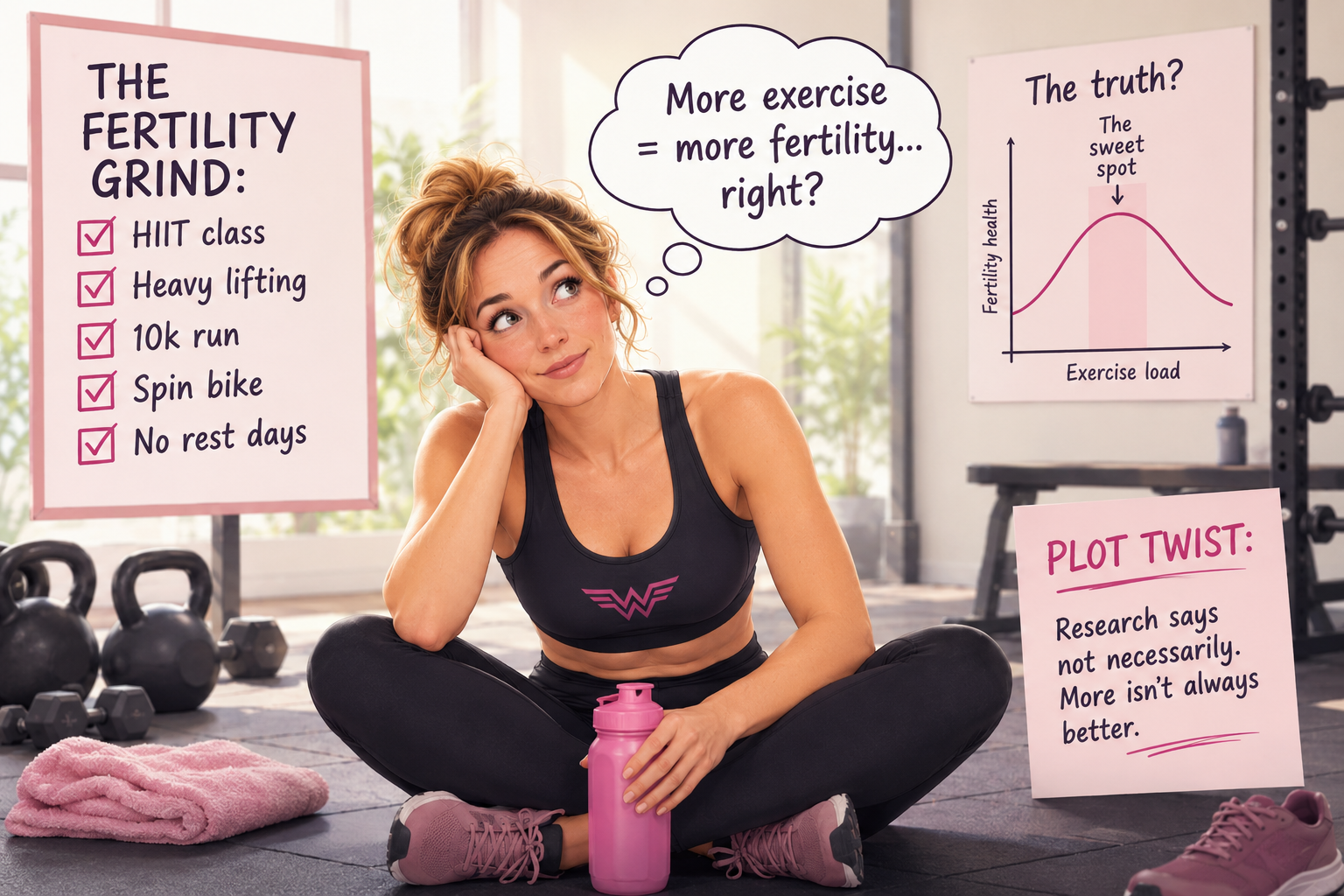
Yes, exercise can affect hormones—but it does not simply “balance” them. Regular movement can support insulin sensitivity, metabolic health, stress regulation and the conditions needed for ovulation. However, exercise cannot reliably raise progesterone or lower oestrogen, and too much exercise without sufficient food and recovery can disrupt menstrual cycles.
Key takeaways
Insulin matters to ovarian function—not only diabetes.
An active and a sedentary lifestyle are not hormonally equivalent.
Exercise can indirectly support oestrogen and progesterone regulation, but it cannot precisely control their levels.
More exercise is not always better: under-fuelling and inadequate recovery can disrupt ovulation.
The most supportive exercise routine is one you can sustain, fuel and recover from.