Can Exercise Really “Balance” Hormones? What Research Really Says
6-minute read
Summary
Yes, exercise can affect hormones—but it does not simply “balance” them. Regular movement can support insulin sensitivity, metabolic health, stress regulation and the conditions needed for ovulation. However, exercise cannot reliably raise progesterone or lower oestrogen, and too much exercise without sufficient food and recovery can disrupt menstrual cycles.
Key takeaways
Insulin matters to ovarian function—not only diabetes.
An active and a sedentary lifestyle are not hormonally equivalent.
Exercise can indirectly support oestrogen and progesterone regulation, but it cannot precisely control their levels.
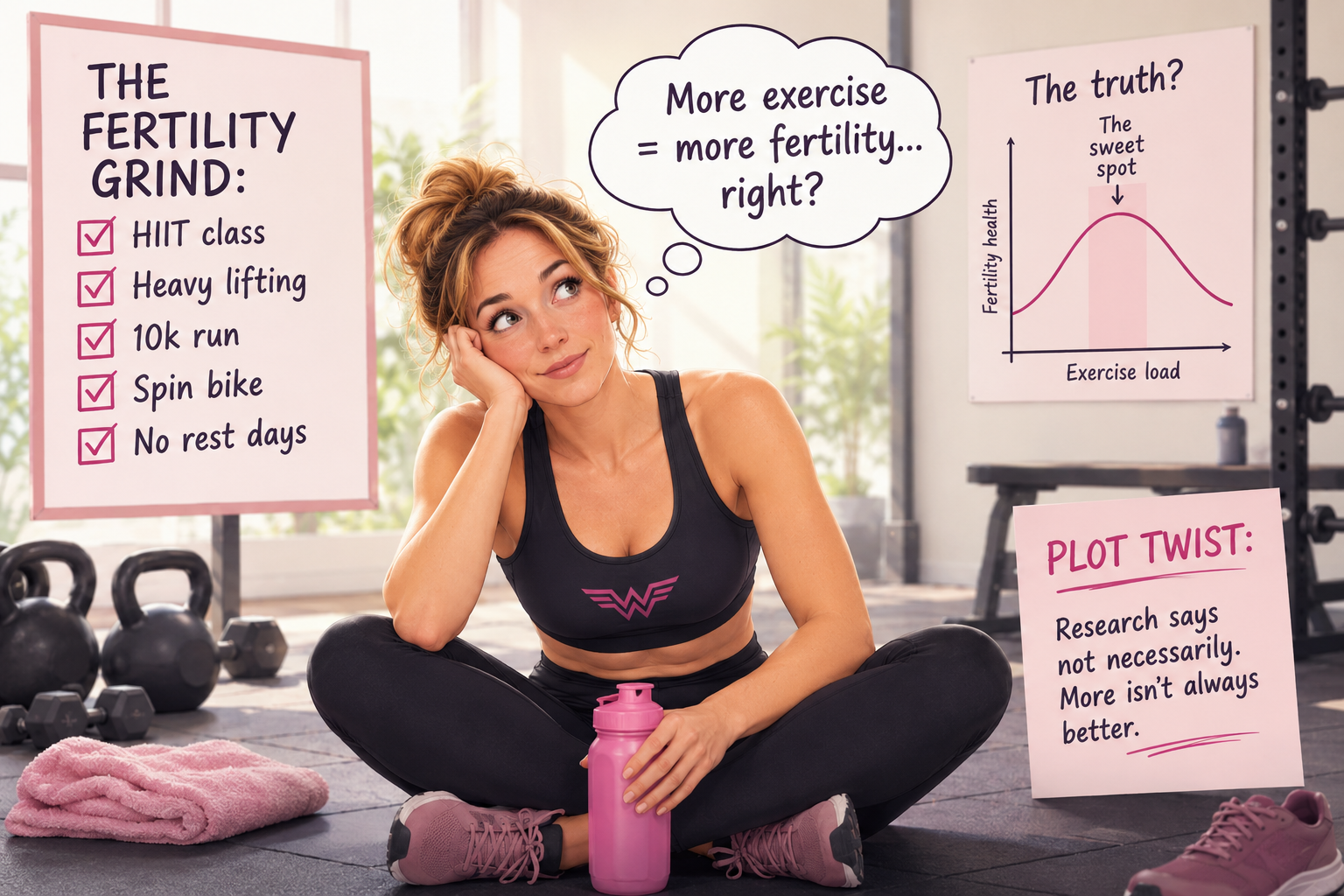
More exercise is not always better: under-fuelling and inadequate recovery can disrupt ovulation.
The most supportive exercise routine is one you can sustain, fuel and recover from.